
Description
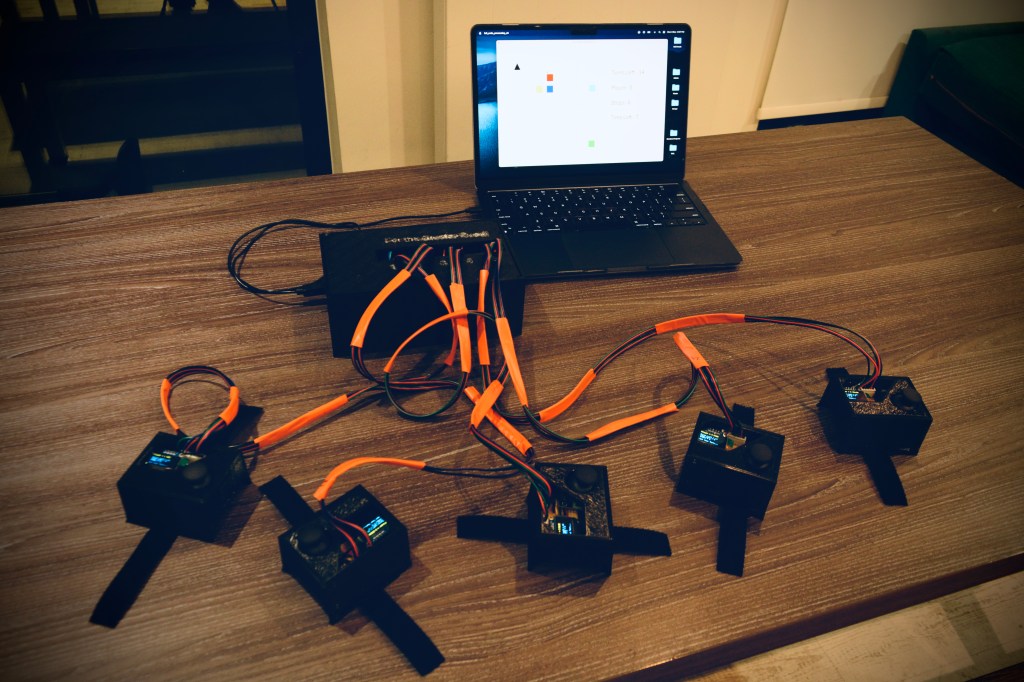
‘For the Greater Good’ is a phygital game that aims to teach collaboration to its players.
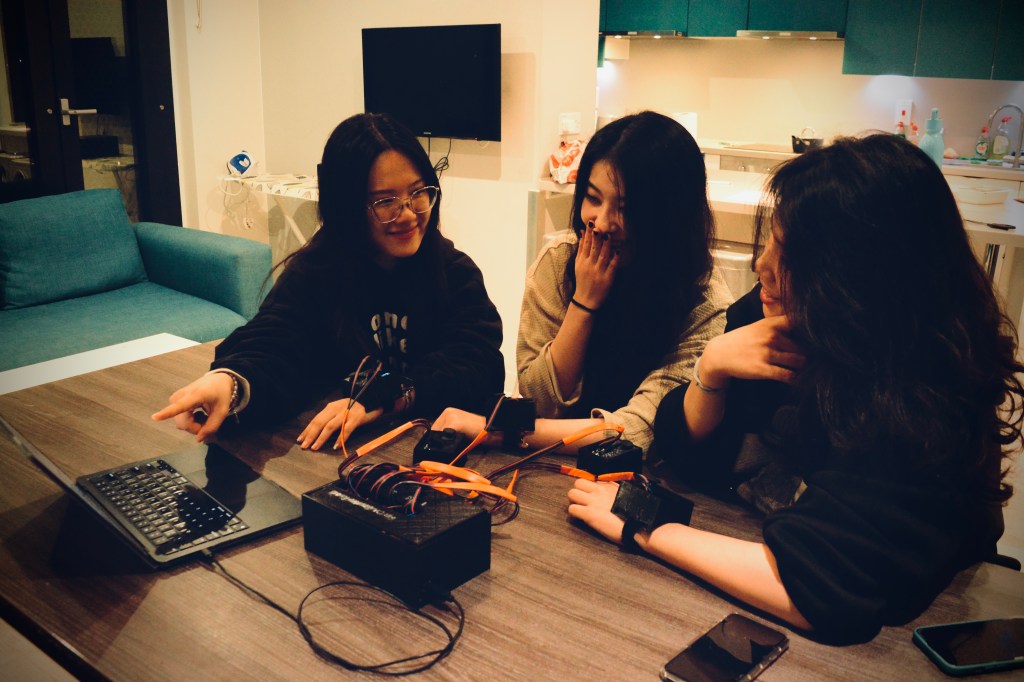
It is a multiplayer game with a single character on screen whose aim is to collect at least 4 out of 5 goals displayed on the screen. The catch is that each of these 5 goals map to individual goals of a player as displayed on their wearables and is secret to them.
All players take turns to move the character on the game board one by one based on a random dice roll by the computer. After each turn the computer will change the goal for one of the players randomly to have a surprise element in the game.
The game ends when 4/5 goals are achieved. The entire group wins then except the one player whose goal is not achieved.
The idea is that during the game play the players negotiate and influence each other so they are simultaneously able to achieve the group and their individual goals. And the hope is that through this kind of interaction they learn key elements of communication, negotiation, influence, conflict resolution and the dynamic of individual and group goals.
Demo Video
Process Video
Project Gallery

Artistic Vision
My history with ‘Play & Learning’
I have been an autodidact all my life, gathering an armory of hard & soft skills by watching youtube videos and learning things myself.
Simultaneously I have also been a proponent of ‘play’ as a tool for ‘learning’ because I believe learning is more long lasting & engaging when it’s fun.
I worked as a product manager at a STEM toys company called Avishkaar in India, making robotics kits for kids so I also have a lot of on-ground experience on designing play experiences that inculcate learning.
The world of ‘Play & Learning’ is what I wish to build a career in and that’s why from the get go I was sure I wanted to work within this theme.
Going ‘Phygital’ : latest trend
‘Phygital’ (physical + digital) is the latest trend within this industry.
Phygital play combines the best of tangible and digital aspects and offers to create the most immersive experience ever.
Osmo, Playshifu and Squareoff Now are some of the many companies that are now commercially selling phygital toys with an increasing reach and impact.
Avoiding a chocolate covered broccoli
Whilst there’s no denying that the fundamental idea of phygital play of combining tangible and digital interaction has a lot of potential. It is easy to fall into the trap of revamping all experiences into a phygital experience without deep meaning or reason, and ending up with a ‘chocolate covered broccoli’.
Hence before further progressing with my project, it was important to answer two questions.

Why phygital and not just digital?
- Adding the physical element to digital learning makes it more hands-on and results in a more effective and engaging learning.
- To teach hands-on skills like craft, construction, music etc. – just digital doesn’t cut it. It is almost mandatory to have tangible experience, else learning can be quite meaningless.
Why phygital and not just physical?
- Digitally enhancing physical play/learning brings with it the possibility to add virtual simulations, which are a much more affordable and quick method of learning than actually working with tangible materials. This can avoid a lot of material wastage before a user is ready to work with physical media.
- Digital augmentation also brings with the opportunity to add elements of sound, light and gamification which again can lead to more enjoyable play and faster learning,

‘Collaboration’ as a core idea
Why ‘Collaboration’?
Having established the baseline criteria of phygital play & learning, I ventured to explore different subjects that can be used as a core idea. Some of the ideas I explored were fitness education, STEM skills and finally life-skills.
Within life-skills I was attracted to the idea of teaching ‘collaboration’ through play because of two reasons :
- Collaboration is a critical life skill relevant to all inter-personal and professional activities. Working as a manager for three years I realized that getting people to work with each other was one of my primary goals and challenges as a manager.
- In my experience in managing teams I realized that young professionals were fairly under-equipped and unaware about challenges in working with others and on delivering goals collaboratively. There is no formal training in schools or colleges around collaboration and teamwork. And lack of collaborative projects at these levels only further deepens the issue.
Collaboration : Why phygital and not just digital?
In person communication is a key aspect to collaboration hence it is important to have a physical binding experience at the center of this interaction.
Collaboration : Why phygital and not just physical?
- Surprise or unplanned elements are a key aspect to collaboration or problem-solving. Digital augmentation provides the scope to add unplanned surprises generated by a randomized algorithm.
- With digital enhancement – there is scope for new play experience each time and ensure a longer lifetime play value to the game.
Constructivism & constructionism
Constructivism & constructionism were two theories that I used as a backbone for my project.
The constructivist theory argues that learning occurs through social interaction and that people learn and develop knowledge individually in social learning environments by constructing their own schema based on the information presented to them.2 For example, when students arrive on the first day of classes and they observe how the instructor is turning on the computer, the projector, and then pulling the screen all the way down to cover the blackboard.1
Another pillar of constructivism is that the majority of attention is on the learners and on creating collaborative, interactive environments.1
The constructionist theory was developed by Papert as a descendant of constructivism, where learners needed to create physical artifacts to practice what they have learned and to experience the outcomes tangibly. Simply, constructionism can be considered as learning by making.3
‘For the Greater Good’
Core concept
Often in organizations and teams, overall goals have to be prioritized above individual goals.
Individual stakeholders need to keep a sense of overarching goals while keeping an eye on their personal goals as well and learn how to plan actions so both can be achieved.
Not only does this require good planning skills but also influencing and communication abilities to convince others and act on the same.
‘For the Greater Good’ is an interactive game that aims to teach just that!

Gameplay
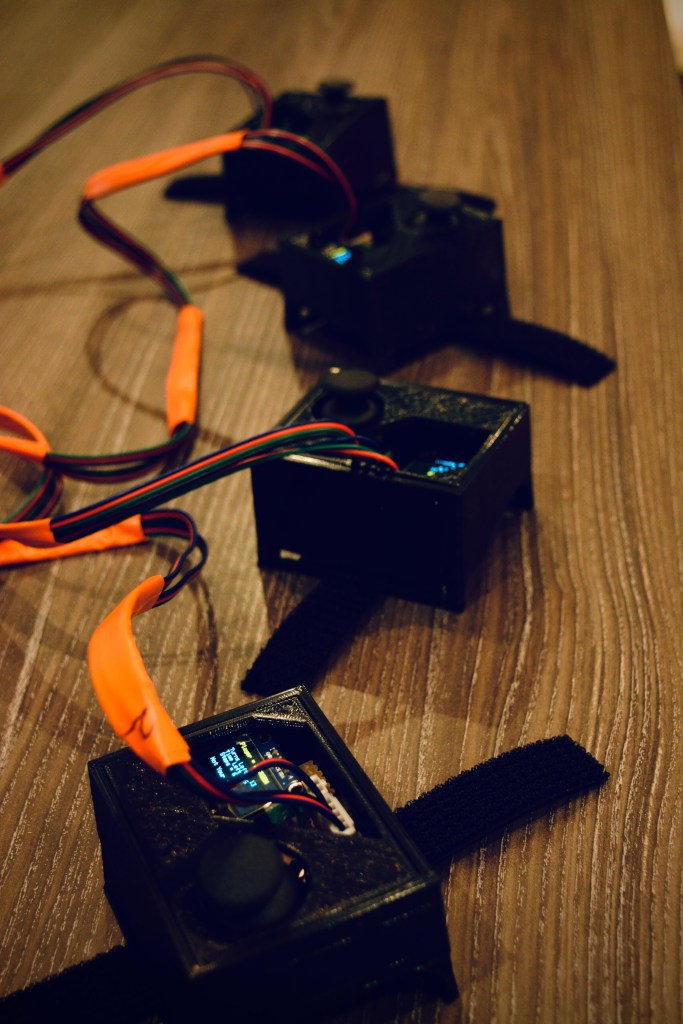
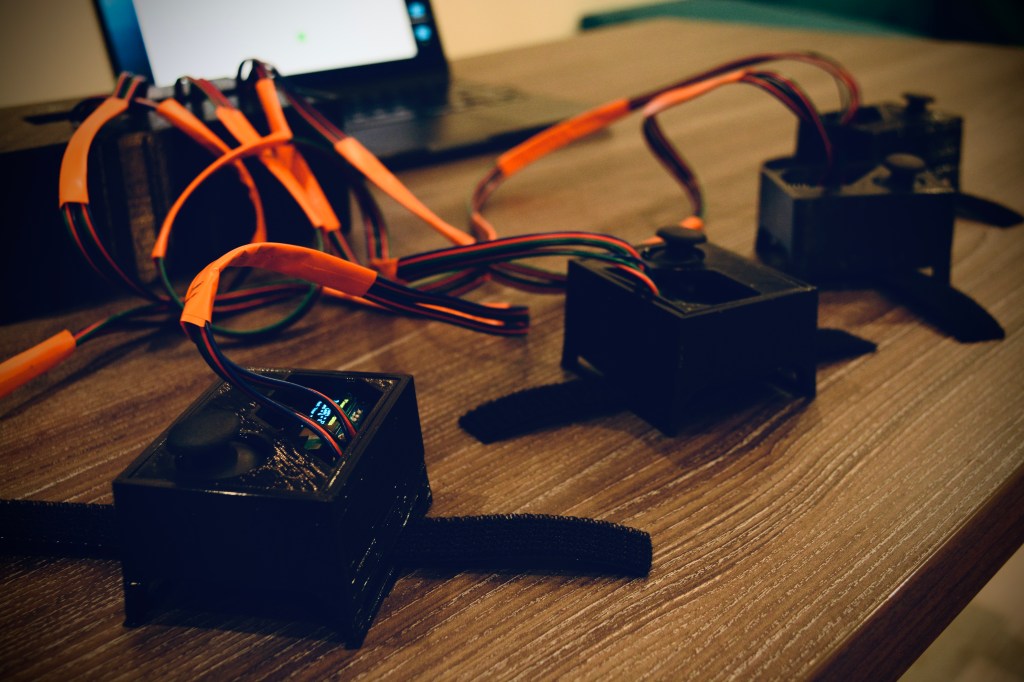
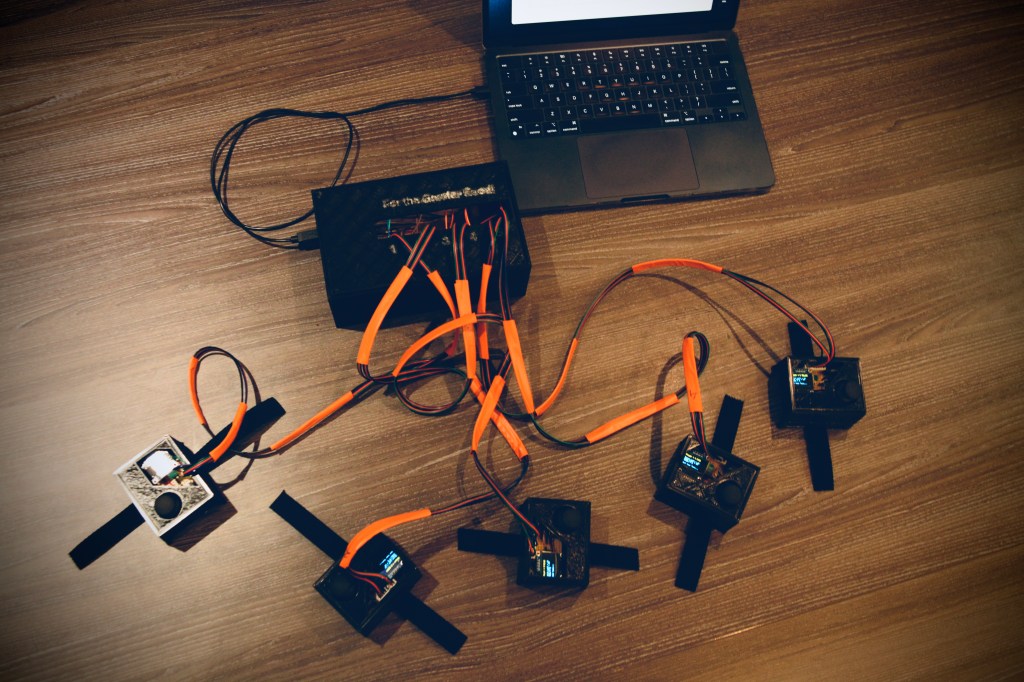
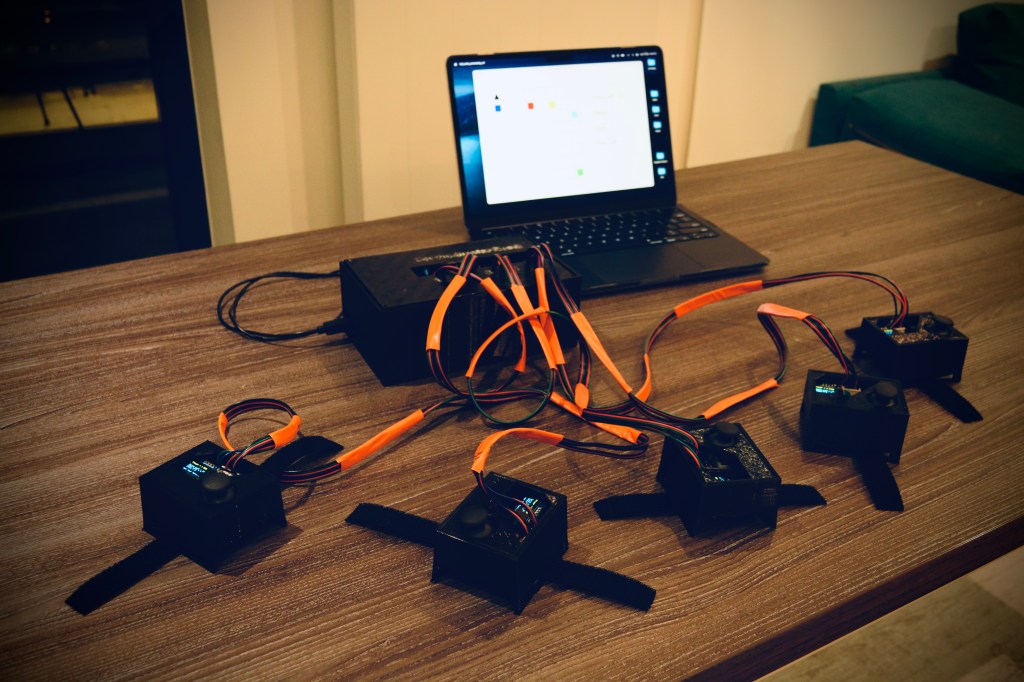
It is a five player game where all players get their separate goals. The aim is to complete at least 4/5 goals in the limited number of moves. All players take turns to move a common peg on a projected game board based on the random dice roll by the computer. The catch is that after each turn the computer will change the goal for one of the players randomly.

Wearable
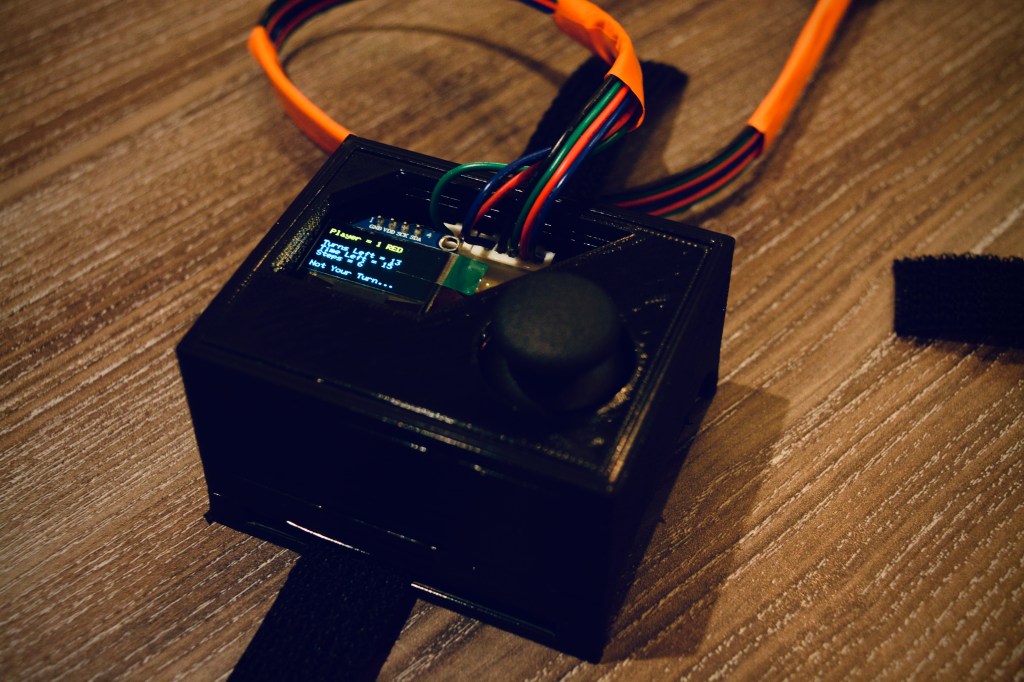
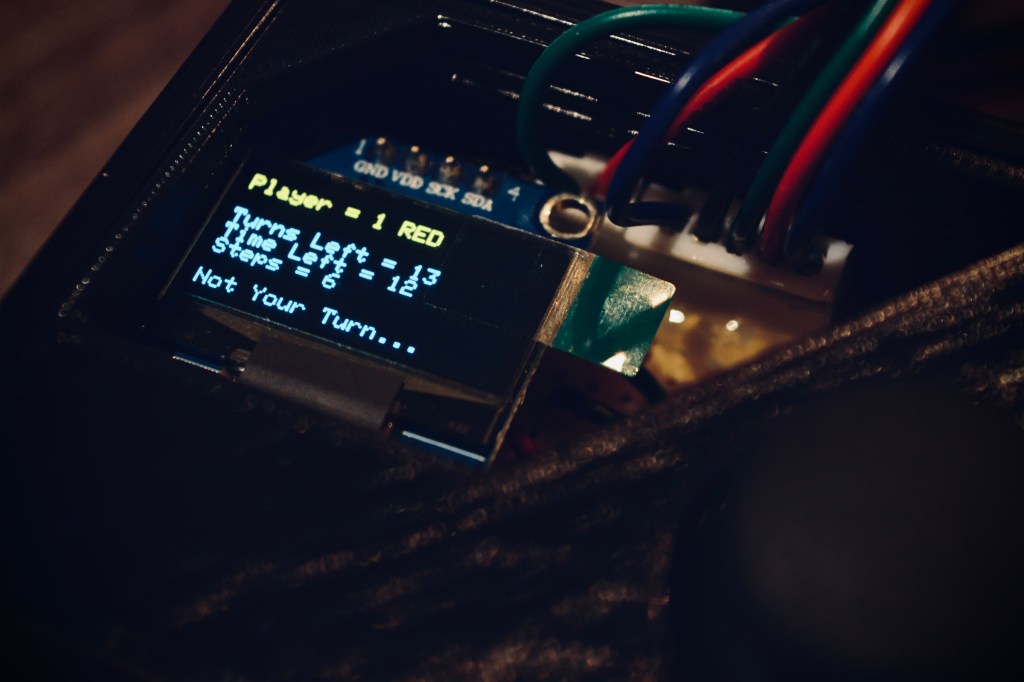
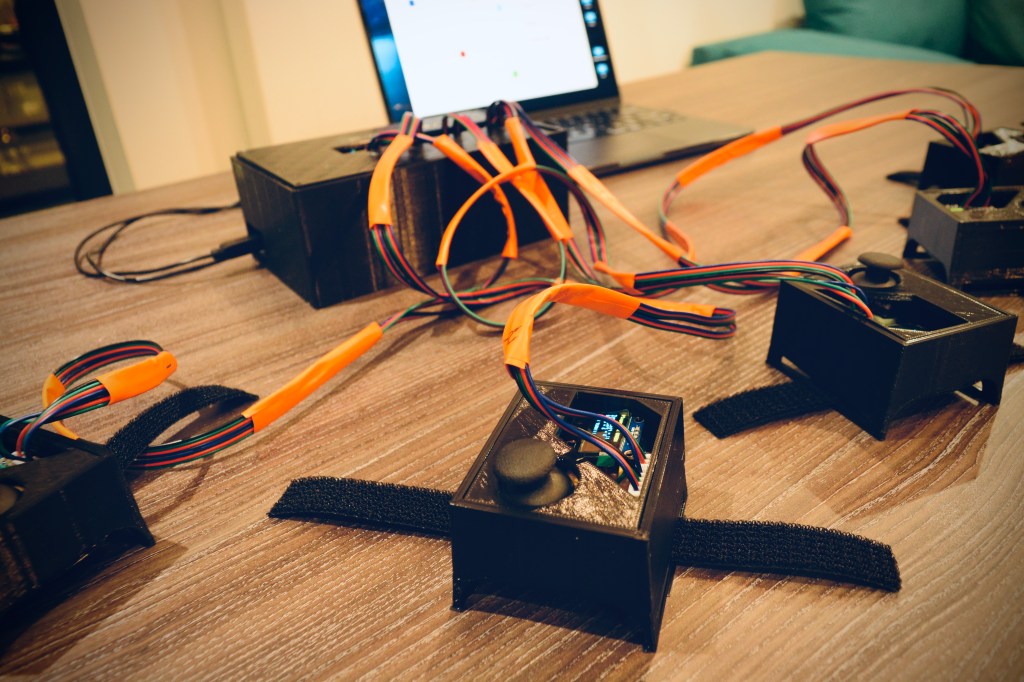
Each player will have a wearable to enable them to participate in the game. The wearable will include:
- Joystick to move the player around
- Screen to show vital info like the player’s goal color, time remaining
- Button to confirm a move
- Data and power cable to connect to the central arduino

Critical Evalution – ‘The Zoommings’ by Pauline Gourlet, Mathieu Le Goc, and Sean Follmer

Project Description
The Zoommings is an interactive physical game for children that aims at fostering children’s understanding of dynamic systems in a playful and embodied way. The Zoommings are cute and clumsy little robots that move collectively and react to users’ inputs. The game invites children to resolve situations by changing a Zooming’s individual behavior, to anticipate how this will affect the system and accomplishment of the overall goal. The kids can do so by changing a robot’s costume which in turn will change its behavior.” 1
Link to demo video – https://www.youtube.com/watch?v=JZLOyXoGObg&ab_channel=PaulineGourlet
Critical Review : The flaw in the foundational idea of teaching collaboration through a single player game
Teaching collaboration skills is the core foundation of this project. And whilst ‘The Zoomings’ does a good job in conveying the existence and importance of multiple roles in achieving a common goal, the gameplay involves a single player dictating roles and actions of all characters in the game.
There are multiple challenges that emerge because of this.
Reinforces central authority over distributed decision making
One of the key aspects of collaborative decision making is being able to contribute inputs and opinions from multiple stakeholders and then taking decisions based on that. If a single player dictates the movements for all characters, this takes away from this idea of active knowledge sharing.
Another key dynamic in play in real life collaboration is influence and negotiation. When stakeholders decide collectively in a non-hierarchical team, or even if there’s a manager in play – being able to influence and negotiate with stakeholders is something that is always needed to be done. This kind of autocratic decision making paints the wrong idea about real life communication and collaboration
These two insights influenced my own collaborative game play where I was certain I’d want my game to be a multiplayer game requiring active opinion sharing and influence/negotiation to actually decide on an action plan.
Power disbalance and role exploitation
Power disbalance and exploitation exist in real life collaborative work. There are roles that have a larger sway in decision making. There are also roles that tend to be exploited and have to carry the lion’s share of work in a project.
Whilst this is a reality of collaborative projects that we can not completely do away with – an active effort is always made by organizations and teams that value a healthy culture to minimize these characteristics in collaborative work.
Single player gameplay in ‘The Zoomings’ in fact does the reverse and only further inculcates bad habits vis-a-vis power disparity and workload delegation because a central non-feeling authority tends to decide in the most emotionless and inhumane way prioritizing efficiency.
This is another learning that I took to my own collaborative game where I ensured the gameplay levels the playing field in terms of role, decision making opportunities and the workload. Each player would have exactly the same role, the same goal and the same opportunities to contribute to the common goal.
Does not address the dynamics of individual goals vis a vis group goals
Often in collaborative work in bigger organizations – the dynamic of individual goals vis-a-vis the overall goals is always at play. Sometimes individual goals have to be deprioritised because of the bigger goals, other times the overarching goals tend to evolve if individual stakeholders are able to successfully negotiate and influence other stakeholder about their personal goals, or maybe charter a path which leads to achieving both the individual goals and the group goals.
Players of a game will be completely blind to this aspect of collaboration in a single player game. Hence it is critical that not only a collaborative game be multiplayer, but also that individual players are simultaneously balancing individual (conflicting) goals and collaborative (common) goals.
This will ensure the players get a flavor of this dynamic of individual and group goals that is very much at play in real life collaborative work.
Ethical Evaluation

At the crossroads of constructivism and constructionism
I discovered the constructivist and constructionist theories (as referred to me by our course professor Jessica Anderson) while working on the project. These two theories really helped me understand and situate my project concept theoretically, critically and ethically.
Analyzing Alanazi’s critical review paper1 on both the theories helped me shape the project in a way so that instead of completely aligning the project to one of the two theories, I opted instead to pick the best of both and address their respective shortcomings.
The constructivist theory argues that learning occurs through social interaction and that people learn and develop knowledge individually in social learning environments by constructing their own schema based on the information presented to them.2 For example, when students arrive on the first day of classes and they observe how the instructor is turning on the computer, the projector, and then pulling the screen all the way down to cover the blackboard.1
Another pillar of constructivism is that the majority of attention is on the learners and on creating collaborative, interactive environments.1
Both these ideas are in strong alignment to my project since I envision that the learning in my game will take place cognitively as a result of the interaction in the gameplay, instead of teaching theoretical understanding about collaboration. Also the game itself is simply a means of creating an environment where such an interaction and learning could take place.
The constructionist theory was developed by Papert as a descendant of constructivism, where learners needed to create physical artifacts to practice what they have learned and to experience the outcomes tangibly. Simply, constructionism can be considered as learning by making.5
This again supports my project where the interaction not only simulates conversation and awareness of collaboration but also actively requires the players to take such collaborative decisions thereby applying their learning to tangible actions.
Ethically gray areas & open questions
Opponents of constructivism have posited the belief that constructivism promotes a teaching style with unguided or minimally guided instructions for students,3 and when students learn with minimal instructions, they become “lost and frustrated”.4
This can emerge as a challenge to my project’s gameplay since a lot of collaboration learnings that emerge as a result of the gameplay would be common knowledge and can possibly be taught theoretically to the players as well instead of following this method consciously creating scenarios where the players experience collaboration challenges and are almost forced to feel lost and frustrated by design.
Part of this is intentional, since I’d also like the players to build active problem-solving skills while they play and attempt to address these challenges by coming up with their own unique solutions. Since it is a game that they are playing and not a real life problem, the stakes are not quite as high and therefore the effects of frustration might not be quite as severe. Yet, it is an ethical challenge I’d like to highlight.
Another challenge about constructivism as pointed out by experts is that it promotes group thinking and ignores the individuality of students even though learning should promote individual rights. Some psychologists criticize constructivism because dominant students control interactions in the classroom while average students might be ignored.6 This is a very valid concern. I have attempted to address this to a certain extent by ensuring that whilst the gameplay encourages group decision and influence, each player actually gets an equal number of turns to hit the final button when it comes to making a move so individual contribution and voices are not crushed completely. This also ensures players always value other players because they’re going to hold the power soon.
Bibliography
- Alanazi, Ahmed. (2019). A Critical Review of Constructivist Theory and the Emergence of Constructionism.
- Piaget, J., &Inhelder, B. (2008). The psychology of the child. New York, NY: Basic Books.
- Papert, S., &Harel, I. (1991). Situating constructionism. Constructionism, 36, 1-11.
- Gourlet, Pauline & Le Goc, Mathieu & Follmer, Sean. (2017). Revisiting Turtles and Termites: an Open-ended Interactive Physical Game with Multiple Robots. 10.1145/3078072.3091979.
- Alanazi, Ahmed. (2019). A Critical Review of Constructivist Theory and the Emergence of Constructionism.
- Piaget, J., &Inhelder, B. (2008). The psychology of the child. New York, NY: Basic Books.
- Kirschner, P. A., Sweller, J., & Clark, R. E. (2006). Why minimal guidance during instruction
- Brown, A., &Campione, J. (1994). Guided discovery in a community of learners. Cambridge, MA: MIT Press.
- Papert, S., &Harel, I. (1991). Situating constructionism. Constructionism, 36, 1-11.
- Gupta, S. (2011). Constructivism as a paradigm for teaching and learning. International Journal of Physical and Social Sciences, 1(1), 23-47.
 Nitish Chopra
Leave a comment